Home
Preparing for fatherhoodFrom the time you decide to go for a baby, all the attention is concentrated on the mother-to-be. And this is not without reason, since she is the one that's going to bear the child for the next nine months. But that doesn't mean that the man's role is any less important. It is important for the father-to-be to ready himself for the next phase of his life. Following a healthy lifestyle Fertility is a growing problem. As per statistics more than 45% of infertility issues are related to men. Therefore, eating healthy food, exercising and living the healthy way will boost your chances of getting over these problems. Nutrition has an impact on the sperm production. So scrap the junk food for a while and get on to a healthy lifestyle. Men need to get at least 12 to 15 mg of zinc each day. Even short-term zinc deficiencies can reduce semen volume and testosterone levels, much needed for healthy sperms. Good sources of zinc include baked beans (a one-cup serving has 3.55 mg), nuts, cereals, seafood, and chicken meat (2.38 mg per three ounces). Regular intake of vitamins and calcium is a must to improve male fertility and prevent sperm defects. Natural sources of calcium such as fat-free milk and curd can be consumed. Get atleast 90mg of vitamin C daily. This boosts immunity. More will be needed if you smoke. Folic acid is a fuel for healthy sperms. Dads need 400 micrograms of it and green leafy vegetables are good sources of this nutrient. Dads-to-be can take the liberty to grab the extra cup of mocha. Caffeine may help men by stimulating sperm motility. Quit smoking and drinking The party's over for your partner once you start trying for a baby, but what about you? Same goes for men. Now is the time to stop smoking, and to stop any excessive consumption of alcohol. A man who smokes has a lower sperm count and a misshapen sperm, incapable of creating a child. Heavy or binge drinking can seriously affect ability to produce quality sperm. Exercise Add exercise session to your daily routine if you aren't doing them already. Exercise improves general health, stamina, and sperm quality. Start with walking for 15 minutes and increase it gradually if you have never exercised before. If you are trying for a baby, avoid exercising in tight-fitting briefs. It causes damage to sperms. Frequent sessions in a sauna or hot tub, long bicycle rides, or any such activity that could cause the testicles to become overheated can compromise the health of sperm and should be avoided. Medical examinations It is a good idea for the father-to-be to have a complete check-up to assess if there are any issues that need to be addressed before trying for a baby. Some conditions to watch out for include: Varicocele, a condition of varicose veins on the scrotum, the sac of skin that contains the testicles. It can lead to infertility. The condition is entirely treatable, so talk to your doctor about the options. Conditions like erectile dysfunction, diabetes, and prostatitis can cause infertility. Sexually transmitted infections, which may cause male infertility. Your doctor can help you get tested and treated. Your doctor can refer you to urologist or a male fertility specialist if you need additional testing or treatments. Remember to discuss possible hereditary birth defects with your doctor. Share with her the medical history of yours and your wife's family. Get finances organized Plan a baby budget. You surely want to give the best to your child. Start planning now. Consider expenses like baby food, diapers, toys, doctor visits, clothes, and day care. This will help you in the future. And this is the perfect time as you are just in the planning phase of baby making. Take advantage of this time before the baby arrives to get things in order concerning your job, insurance and budget plan. If you and your spouse discuss and agree on expectations, goals and strategies now, you can avoid arguments on money later. After all, you don't want baby to pick up on any tension. Dump your stress Chilling out can increase your potency. So the 'go for a holiday' advice actually works. Practise regular meditation or any exercise that will help bring down your stress levels. Try reading books on fatherhood or parenting and learn tips and advices well in advance. So gear up and start preparing for the change from being the coolest dude to the coolest dad.It is your responsibility to help your partner in all possible ways and make her feel that you are equally excited and keen for having a baby.
Tips for the new fatherWhen a baby is born, all the attention is on the mother and the baby. And rightfully so, since the two need all the care in the world. However, the role of the father is very important even at this stage. The new dad has lot of responsibilities on his hand - he has to take care of both mom and the baby without getting annoyed or irritated. Here's how to do your best as husband and dad: Playing an active role in your child's life is vital for his emotional, physical, and cognitive development. Hold your baby as often as possible. By directly caring for your infant, you will learn about the baby's needs, how he communicates, and what comforts him best. Be prepared to feel left out at times. Your wife utilizes most of her energy and attention on the new baby. Be extra supportive and patient. Delivering a baby can be traumatic. Hormones ebb and flow. If there is ever a time to understand and care for your wife, this is it. Dads need to be more supportive and helpful. Share tasks like changing diapers, help around in the house by doing some household work like laundry. Talk to other new fathers about your experience and theirs. Most new parents experience a loss of sexual intimacy. Abstinence during pregnancy, pain, perineal tear, and breastfeeding can inhibit a woman's desire to have sex. Men can feel betrayed if rejected physically and mentally. It is important to talk about your feelings. Choose ways like cuddling, kissing, and holding hands to be physically intimate. One of main roles of a father is that of a protector. There are many ways you need to do this. Safety is one: child-proof your home. Dads now need to take care of driving, diet, and risk taking. Your baby needs you for a long time. Being healthy and happy dad is one of the greatest gifts you can give your kid. Dads need to provide financial protection to the new child. So get a life insurance, car insurance, an emergency fund, and a will. Try your best to spend as much time as possible with your new baby. While work may be your passion, it won't be long before children grown and no longer want to spend time with you. Take advantage of these years. Give the tiny tot gentle hugs. Dads shouldn't be afraid to show affection. Babies need physical contact, and not just from their moms. Snuggle with them, hug them, and kiss them. Read a baby-book to your child. Babies do understand. Sing him a gentle song or play a very soft music. Find out what makes your baby happy. Be good to the mom. Dads should be good and loving to mother of their new baby. Give her some time alone and babysit while she goes out, show affection to her, and give her little surprises. Because when the mom is happy, the baby is happy and the dad will be happy too.  
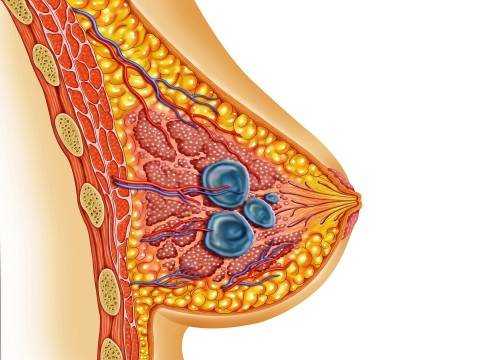
Breast lumps- myths busted!The rise in the occurrence of breast cancer in women, since past decade or so, has made women, especially in the urban areas, very cautious about lumps in their breasts. Whenever there is a small lump in the breast, the first thought that comes to mind, is may be this is cancerous. However, instead of taxing your brain with worries, it is better to take action and consult your caregiver. Here are some of the myths that are regularly associated with breast lumps and the real facts related to the same. Myth: If there is a breast lump, it must be cancerous Statistics reveal that out of 10 cases of breast lumps in women, only 2 are cancerous. More often, these lumps are due to fibroadenoma or cysts. In many women, lumps are formed during the menstrual cycle and they go away after it ends. It is not simply possible to tell exactly what kind of lump it is, just by feeling through hands. However, it is important to detect the composition of the lump and to do so at the initial stages, so that if it is detected cancerous, early diagnosis and treatment can save your life. Myth: If your mammogram is normal, you are safe and the lumps are not cancerous This is not particularly true. To detect the presence of cancerous cells, you need to get more tests done; an ultrasound, an MRI and also a follow up mammogram, to get a second view of the lump. Doctors also suggest a biopsy to be 100 percent sure of the diagnosis. If the lumps persist but there is no detection, your doctor may ask you to keep doing the tests at frequent intervals, to assess the development. Myth: Malignant breast lumps do not cause any pain Although breast cancer patients do not suffer from much pain, this does not mean that if you do not have pain, the lump is non-cancerous. There are different types of breast cancers; and in some types such as the inflammatory breast cancer, the patient can suffer from warmth, tenderness, redness and swelling, followed by pain in the lumps. Myth: If you get a lump while breastfeeding, it is not cancerous It is true that breastfeeding reduces the chances of development of cancerous cells. But there is still a possibility and hence you should not ignore the formation of lumps. It is advisable to immediately get an ultrasound to confirm the condition of the lump. Myth: Lump in young women cannot be cancerous Women can develop breast cancer at any age. Hence, if you have a breast lump at a young age, or even if your teenage daughter has developed a suspicious lump in her breast, you should always get it checked, at the earliest. Most often, cancer develops in the breast when women are past their menopause period. But this, in no way means, that they cannot get it at younger age. Myth: Only a larger lump can be cancerous, not a smaller one Lumps in the breasts can be of all sizes; and the size, does not determine the presence of cancerous cells. According to breast-imaging specialist at New York's Manhattan Diagnostic Radiology, Melissa Scheer MD, you must immediately see a doctor, whenever you feel the presence of even a tiny lump, because, a small lump too may turn out to be aggressively cancerous. Most often, the lump in the breast is non-cancerous; however, it is advisable to consult your caregiver immediately, once you discover the lump for the first time.
Mother can pass stress patterns to childThe stress patterns in the mother have shown to affect the mental development of children and have been found to play a role in autism and even schizophrenia. "Pressure and stress is the common cold of the psyche." - Andrew Denton There are several studies conducted in this area of research. The results are varied and present a set of multiple issues that children can face if their mothers have been under stress when they were in the womb. In later years, these babies grow into children who have a weak mental state. They cry easily, pick the escape route in conflicts and difficult situations, are anxiety prone and may get easily bullied in social environments. Their social adjustment gets hampered due to emotional weakness. These children are not good at handling weak moments and end up being rubbed off the wrong way, time and again. It pushes them into a vicious cycle. The incapability to tackle socially stressful situations further scares them. They get bullied and become even more vulnerable. What to do? The approach is twofold. Curb the problem in the beginning. Yes, it is natural to be stressed. Pregnancy can be tough, physically as well as mentally. With the modern life, the stressors have increased and there is always so much to do in such little time. Relationships, work, food, health, hormones - there is ample to trouble you. Find a release for the tensions. The one growing inside you needs you to be happy and healthy. Do things that make you happy, keep your happiness at the top priority. Everyone around you needs to understand that. Reader, if you are the husband, parent, sibling or friend of a pregnant lady - support her, understand her and do all you can to make her smile. Do not be the one who reprimands if she is worried, be the one who takes away her worries. Pave way for a baby who is happy and ready to start a new life. Second, do what you can at the given time. The child is already here and is facing emotional adjustment issues - extend your support to him/her. Give the kid the ground to grow strong roots and stand tall, without being disturbed easily by gushes of the wind. While it is difficult to avoid stress, you can always try to handle it better, for the sake of your child.Soon-to-be mothers who go through stressful situations may be passing on the stress patterns to their babies.
16 myths about baby careA new mother experiences a range of emotions. Chief among these is fear, which is a result of the love and attachment that she feels for the baby. In such situations, mothers often tend to believe myths that make no logical or medical sense. Myth 1: If I don't breastfeed my baby immediately after the birth, I won't be able to bond with him adequately. Fact: Although the first few hours of a baby's life are important for both mother and child, sometimes due to unavoidable circumstances, the baby is kept away from the mother. For instance, in cases of cesarean delivery, the new born babies need immediate medical attention, and hence are kept away from the mothers.  However, the love and care you show the child over the years will more than make up for the loss of attachment with the baby during its first few hours. Myth 2: Pinching the baby's nose will make it pointed. Fact: Pinching the nose will only hurt the baby. It will not make the nose pointed. It is possible for a baby to be born with a flat or tilted nose if it gets pressed during delivery. But this is temporary and the nose becomes normal as the nasal bridge develops completely. Myth 3: Mothers should not use yellow clothes and yellow food while breastfeeding as it causes jaundice in the newborn.  Fact: The color of the mother's clothes can't affect the baby's health. There isn't any evidence to show the relationship between yellow food, clothes and jaundice. Myth 4: Umbilical cord stump should be cleaned with alcohol swab every time after changing diaper.  Fact: Alcohol may delay the healing. It is recommended to keep stump clean and dry till it falls off. Myth 5: Some babies can be allergic to mother's milk.  Fact: No. A baby is never allergic to mother's milk. Myth 6: Baby should be wrapped up tightly. This helps to straighten the hands and feet.  Fact: A child's limbs develop faster when they are free to move and not wrapped. Myth 7: Holding the baby all the time will spoil him. Fact: Babies cry to express pain, anger, irritability, hunger, sleep everything. Holding or picking him up to comfort won't make him a spoiled child. Myth 8: Do not take your newborn baby outside. Always keep him in the house.  Fact: Fresh air is good for the baby too. Just avoid heat, crowds and unhygienic places. Myth 9: Vaccines cause autism. Do not vaccinate the baby.  Fact: It is a rumor. Immunization is very important to protect the baby against a number of diseases. Myth 10: Babies do not spit up if they are breastfed.  Fact: It is normal for the babies to burp, spit up, and drool. Do not worry about it if the baby is gaining weight normally. Myth 11: Sleeping on the head causes flat head.  Fact: It is advised medically that all babies should sleep on the back to prevent sudden infant death syndrome. Alternate the head position daily as flat head can be caused only if baby sleeps in same position daily for long time. It is an occasional occurrence.  Myth 12: Putting few drops of oil in baby's ears will keep it clean.  Fact: Do not put oil in the baby's ears. It can hurt the tiny eardrums leading to pain, soreness, and even hearing loss. Oil can cause ear infection too. Myth 13: Use crib bumpers to protect head of your baby. Fact: They are not advisable. The baby's head can get wedged against a bumper causing strangulation or suffocation. Bumpers are dangerous. Myth 14: Stop mother's milk if baby fed only on breast milk has loose motions.  Fact: Passing 5-6 loose motions is normal in a baby. Continue to breastfeed. Do not stop it. Myth 15: Attention span is very short in babies.  Fact: Babies, in fact, have excellent attention spans and have interest in the all things around them. This is why babies learn things so quickly.  Myth 16: Wrap up the baby in blanket if he has fever. Sweating will bring the fever down.  Fact: The fever will rise if you wrap the baby in a blanket. Try to keep the child cool and sponge him with cold/warm water to bring down the fever with the doctor's advice.    
Your child is ready for school... but are you?It was still okay. Just 2-3 hours which you could utilize for other things while your child was away briefly. Now you will have to compete along with teachers, textbooks and homework for your child's attention. Well Mother, we know this is going to be difficult for you, but let's see if we can try and make it any easier. Think of school as an extension of the tender loving care that you provided. The only difference is that the TLC will go towards nurturing and developing his/her brain and help it learn important skills which will help gain a balanced development. At this point your child feels bad and completely unsafe in this new hostile world of teachers and uniforms and what not! If you weaken at this point your child will cop on and then will come the emotional blackmail. So explain the importance of school to your child as it will make the transition easier. It is always good for mothers to accompany their children to school but imagine watching mother walk away and all hell can break loose. So if your child's school has a school bus facility you can walk him to the bus stop and then say your goodbyes there. A lump in the throat at the bus stop is preferable any day than a scene at school with a child holding on to mother for dear life. Do not criticize your child's school or assignments given by them as children can catch on quite quickly and that can be reason enough for them not to concentrate on school activities. Always encourage your child to talk about what he did at school and ask him questions about his friends and teachers. This gives the impression that school is as important as home and gradually even you will reconcile yourself to the fact that school is here to stay.
Balancing marriage and work: The top 5 tricksFor women juggling between home and work is very difficult. Yet, the number of women choosing to go out and work, while managing their homes, has increased over the years. This is because a successful career helps a woman establish her identity in society, gain respect and do justice to her inherent qualities, passions and dreams. So, a successful working woman, is a happy woman and statistics show that such women also keep their kids and spouses happy. More stable marriages During the seventies, when women started entering the workforce in large numbers, there was an instant rise in the divorce rates. However, over the past decade, the divorce rates among working couples have actually declined. Today, men have extensively adjusted to the idea of having a working woman, as a partner. In many countries, men actually share the domestic chores and devote time to childcare, so that their women can successfully handle both, work and home. However, the main responsibility of the home and the kids is still primarily, in the hands of the women. Here are the six keys to manage your work and marriage successfully: Find the right job You can ease out the stress of managing the work and home front, if you make the right decisions. Studies indicate that couples having access to less demanding work, have better sex and better relationships and hence, are less likely to be stressed out. However, in case the working hours are long, the situation can become the opposite. Hence, it is important to find an exciting job, over which you can still have control, especially when you have small kids at home. Adjust the working hours Most women have to leave their careers halfway because their husbands work for long hours and there is no one available to care for the kids. If the wife too is good at work then, the couple should take up jobs that provide an opportunity for both of them to work, since doing this will keep both of them satisfied. There is a possibility that the husband, or the wife, may lose a bit on the income in this adjustment, but ultimately it increases the chances of having a happier marriage. The negative impact of leaving work If a career-oriented woman leaves her job due to family demands, it can shake the very base of the marriage, while also leaving her, depressed. Also taking a break, means you have to catch up very fast when you want to restart your career, which in reality, is quite difficult. In these situations, there is also a huge wage gap, between what you used to get before your break, and what you are getting after, that can lead to depression. Working moms help fortify the relationships between kids and their fathers When the father spends time babysitting the children, a closer bond develops between the kids and the father, which is usually not possible in families where the dad goes to work, full time. Studies show that children raised with equal devotion from both father and mother, have higher goals and aspirations and are even more empathetic. Feel less guilty A working woman usually feels guilty because she cannot spend as much time with her children, compared to the dedicated housewives. However, if the husband shares the duties related to bringing up the children both parents can be happy while playing their parts well for their kids. A woman with a successful career is positive and confident about everything she does, which ultimately makes her family happier.

Dealing with obsessive thinking and worriesAn old adage goes - 'Worry is like a rocking chair. It gives you something to do but it doesn't get you anywhere'. This is absolutely true for many of us who have developed the habit of worrying unnecessarily over outcomes and circumstances. Thinking about things and over our course of action is a good thing because you should always think twice before acting. What about obsessive thinking? Is it good for you? Anything in extremity is a bad thing, whether it is your favorite food or your thoughts. Worrying incessantly is a part of obsessive thinking where you cannot let go of negative thoughts and they circulate in your mind continuously. Obsessive thinking is a negative infinite loop, a broken record that is stuck without having anyone to click the stop button. So how should you deal with this obsessive thinking that is sure to spell your doom in the long run? Though psychologists have devised various scientific methods of overcoming obsessive thoughts and worries, here we have listed down some easy to follow rituals that will help you deal with such worries and thoughts. Meditation - Yoga swears by the art of meditation as it is thought to release all negative energy from the mind and soul. Concentrating on your breathing and also absorbing a positive source of energy is the essence of meditation. So whenever you are obsessed about something, sit down, calm your nerves and meditate. Physical activity - Exercising always helps. Engage in physical activity which increases the body's metabolism and requires effort. Indulge in those dance lessons or swimming or maybe cycling and you will divert your mind from those negative thoughts. Indulge in your hobbies - So you thought you don't have time for your hobbies, but your hobbies relax your mind and body. Moreover, a hobby also takes out the creative side in you. So, whether you like to collect coins or stamps, or lean towards arts and crafts, a hobby is sure to occupy your mind and take you away from worries. Socialize - Friends and relatives are your lifeline as they help you in those tough situations. Even if you are mentally not at peace, making social calls on your friends and relatives will take the edge off.  Try to meet people who can empathize with you and help you move out of it. Socializing will give you that much needed break from the vicious cycle of your thoughts. Though a short-term relief, going out for movies or taking a weekend getaway with your near and dear ones or even indulging your wife in shopping, can be helpful. Confide - Talking to someone close who understands you helps you in expressing your troubles. Thinking obsessively, you usually tend to ignore your feelings and emotions. Your mind remains trapped in the net of those obsessive thoughts and your emotional well-being takes a backseat. When you talk to another person, he or she will hear you out and help you relieve the stress that is on your mind. They would understand your state of well-being and support you emotionally. Be mindful - You may find it easy to go back into the same negative thought process. Don't let your mind chatter. Stop your mind by standing up for yourself. Stand in front of the mirror and say, "I am not a victim. I have the power and strength to move ahead" Do this whenever you become aware that you are going back into the same thought process.  This will give you the mental strength needed to come out of it.  Be mindful and aware but don't be too harsh on yourself. Be responsible -Your mind can make you or break you. If you understand this truth you will find it easier to manage your thoughts. Take responsibility of your thoughts good or bad.  The mind can create thoughts to project blame or judgments about others.  When you own your thoughts, you will find it easier to shape them the way you want. Create a higher vision of your life - When you keep a higher vision in your life, you can move ahead easily.  By developing a higher vision, you are asking yourself, who am I?and finally working towards it. You take positive actions and thus there would be more gratitude for what you have and less resentment for things that do not work.   This stops your mind from working unnecessarily. Obsessive worrying is a psychological disorder which in extreme cases has to be dealt with pathologically. Do not let your condition to reach the extreme end of the spectrum. Follow the above mentioned suggestions and try to deal with those thoughts yourself. It may take some time but rest assure, it will be effective in the long run.
When the grey matters!Greying of hair happens to all of us at some point in life. Some may get it early and other fortunate ones may get it when they are 50. Premature greying and hair fall is a common problem faced by 70% of females in India these days. What are the causes of greying of hair and what can be done if your hair starts to go grey early? What are the probable causes of grey hair and hair fall? Deficiency of nutrients in diet. Excessive stress. Dandruff. Diseases like thyroid disorders, anemia, and vitiligo. Side effects of certain medication. Hair problems are seen more in women who smoke or drink. Childbirth and menopause are the periods of life when most of the women invariably have hair loss. Hereditary pattern of premature greying. Today's beauty procedures like coloring, bleaching, dyeing, perming, and straightening cause hair problems at a young age. Environmental pollution. Treatment and prevention Have a balanced diet. Ensure proper nutrients reach your body in every meal. If you are anemic, treat it with proper medication. This can be an underlying cause. Have a good sleep. Avoid tension and stress. Apply oil regularly and massage. Drink lots of water. Avoid exposure to chemicals. What can be done to hide the grey hair? Apply amla oil to your hair to make it healthy. Apply henna, lemon juice, fenugreek seeds paste, made in an iron container, on your hair to give them a color and reduce greying. Boil gooseberry pieces in coconut oil. When they turn black apply it on the hair. If you have 45-50% grey hair then you can use a permanent hair color.
10 bedtime beauty essentials! Here are the beauty essentials you need to take into consideration, before you hit the bed: Baby-soft soles :Before you sleep, apply Vaseline on the sole of your feet. This will adequately moisturize your soles and you can wake up to the great opportunity of wearing those heels you have been dying to try out! Healing the puffy eyes : If you are worried about waking up with puffy and tired eyes (even after 6 to 8 hours of sleep), then put on a little eye cream. You can also keep an extra pillow and make sure you sleep on your back. This will allow the fluids around your eyes to drain easily and reduce the puffiness. Trying out wavy hairstyle : Bedtime is the best time to work on your hairstyle. Before you sleep, shower and fashion your hair into the style you want. Apply a styling cream on your hair gradually, after having air-dried it. Now, decide if you would like to put them up in buns or braids. Stylize them into the pattern and wake up to wavy hair! Let your skin breathe : Those who are suffering from dry skin can apply moisturizer. A humidifier is also a great accessory for help in these cases. You can switch on the humidifier before you go to sleep. This will help your skin to retain its moisture through appropriate hydration. Keep aging at bay :Did you know that sleeping on cotton pillowcases can increase the chances of creases and wrinkles on your skin? Prevent wrinkles by using silk or satin bed clothing. This will also reduce hair breaking. Wake up, miss white smiles: If you want to take off the yellows from your teeth, then brush some baking soda and let them stay for about 8 minutes. Afterwards, thoroughly rinse your mouth. Do not perform this beauty tip more than once a week, it will negatively affect the structure of your enamel. Work on your complexion :During the day, sunlight might disable some face creams from working effectively on your complexion. Make the most use of night and apply a face cream containing retinal and vitamin C. Lengthen your lashes : Eye lashes depth and grace to your eyes. You might feel that working on your lashes will require way too much effort. But, much to your surprise, everything your lashes need is contained in a natural ingredient - castor oil. Consisting of Omega-3 fatty acids, which are highly hydrating, they will avoid your lashes from breaking and also strengthen them. Apply castor oil on your lashes before you sleep and watch them grow thick and healthy within a few weeks! Taking care of your hair : Skim leave-in conditioner through your hair in the evening and let them stay on till the morning. This will let them become soft and shiny. You can also use coconut oil as an alternate conditioner. Readying your nails for polish : Depending on the skin type, the nails of certain people become dry. If you are one of them, it would be best to apply a cuticle cream or oil on them before you sleep to wake up to polish-ready nails.
Winter - When your heart feels the cold too!As per a study in America, 193.6 people of every 10000 people die of a heart disease every year. 53% of the heart attacks occur in the winter months. Heart diseases have a seasonal trend as found by medical research recently. A team of medical researchers recently conducted a survey which saw 10,000 participants between the ages 35 to 80 from around seven European countries. The study was conducted to see if there is any seasonal variation in the presentation of heart diseases. The participants were measured on the parameters of blood pressure, waist circumference, body mass index, blood glucose levels and blood lipid levels. The parameters were later adjusted for sex, age and smoking. The results revealed that the incidence of heart disease shows an upward trend in the winter month [Jan to Feb] as compared to the summer months [June-Aug]. The researchers accept that there is no logical explanation to these findings. A plausible cause being the fact that the eating habits change in winter. One tends to eat more which in turn increases the cholesterol levels leading to heart diseases. Several other theories are being put forth. According to one, during the winter months the body undergoes hormonal imbalance. The day and night variation in the hormone levels, especially that of cortisol varies. This results in a lower threshold for heart attacks. Yet another theory says that the cold temperature tends to constrict the arteries narrowing the blood flow to the heart tissue and this result in a heart attack. On the basis of this study, scientists advise that more attention is to be paid to heart health during the winters.
Stress-free sex: Know your safe period!Having sex is a pleasurable thing; and the nicest way to enjoy it, is to give in without being bogged down by the fears of getting pregnant. Not every act of sexual intercourse will result in pregnancy. There are days when your chances of conception are very high, just like there are days when the chances of getting pregnant are almost nil. Identifying these days will help you enjoy a better and a more stressfree sex life! A woman's menstrual cycle starts from the first day of  bleeding and ends about 28 days after that, on an average. Ovulation occurs on the 14 day of the menstrual cycle. The 14th day is the ideal day, theoretically. Since every woman's menstrual cycle differs, the day of the ovulation also differs. Hence doctors calculate the fertile period from the 12th to the 18th day of the menstrual cycle. This is the period when the chances of ovulating and hence getting pregnant, are optimal. The 1st to the 7th day and the 19th day to the start of the next cycle, are the days when the ovulation chances are very low. This means if you make love during these days, there are very little chances of you getting pregnant. This is the case with women who have regular period cycles. In case your cycles are not regular, then you would need to do a bit of math to calculate your safe period. For example, if your shortest cycle is of 26 days and the longest cycle has been of 31 days, then: 26-18= 8 and 31-10=21, which means the 8th to the 21st day of your cycle, are the most fertile days. The 1st to the 7th day and then the 21st day to the start of your next cycle, are the days that are safe for you to enjoy sex, without fear of getting pregnant. Opting to have sex during the 'safe period', isn't always fool-proof though. A lot of women have irregular cycles and the cycle length can vary from woman to woman; which is why the so-called 'safe period', is in truth, not 100% safe. It is always better to use condoms or other contraceptive methods like the oral pill to prevent unwanted pregnancies.
Painful intercourseSome of the causes affecting women can be: Going too fast, penetrating from an awkward position. Do not hesitate to tell your partner that it hurts and he needs to slow down or change position in order to make you comfortable and prevent pain. Dry vagina or lack of natural lubrication in the vagina. This dry vagina is caused due to some medications, changes at the menopause. Sometimes just increasing the time of foreplay can help vaginal lubrication. Use water-based lubricant to reduce pain. Failure to fire off. Sometimes failure of the vagina and uterus to respond to sexual arousal can lead to irritation and tenderness. The vagina may be too tight for the intercourse sometimes or the uterus may not be raised so that the penis comes in contact with the cervix during penetration. Using other penetration methods can be helpful to explore the level of arousal before engaging in intercourse. Vaginismus can be the cause of discomfort. Muscles surrounding vagina are sometimes very tight and lead to pain and intercourse to be painful. Woman can examine herself with her fingers to see if vaginal walls are tighter than normal. It can be vaginismus. Normal cause is nervousness or anxiety. It is reversible. Good foreplay before intercourse will help to relax the muscles and help lubricate. Just relaxing before the act can be helpful. Vaginal infection and inflammation due to yeast, herpes, etc. can make intercourse uncomfortable. Fabrics, creams, perfumes may cause irritation in area in some women. Avoid these. First-time sex can be a little painful. Rupture of the hymen can cause discomfort during penetration. Start slowly or begin with forms of penetration other than intercourse. Psychological pain. Sexually traumatic experiences or feelings of guilt associated with sex can make the act painful. Consult a sex therapist or psychiatrist. Discomfort during intercourse is experienced by men too, various causes affecting this outcome for men are: Tight foreskin. During first attempt at intercourse, tight foreskin will make retraction painful. After sometime, the foreskin will become loose and make intercourse comfortable. Any lesion on the penis skin can make intercourse painful. These may result from non-lubricated masturbation or rapid intercourse or STDs. The blisters due to herpes infection can make intercourse extremely painful.
FAQS
T&C FAQS